
| Name: |
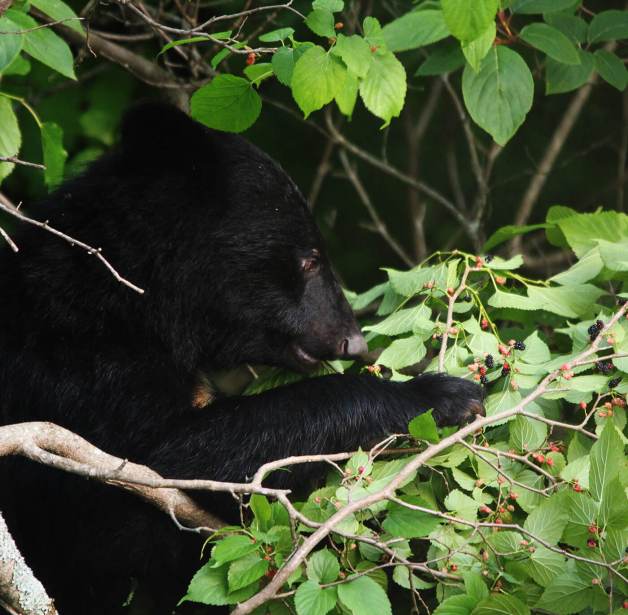
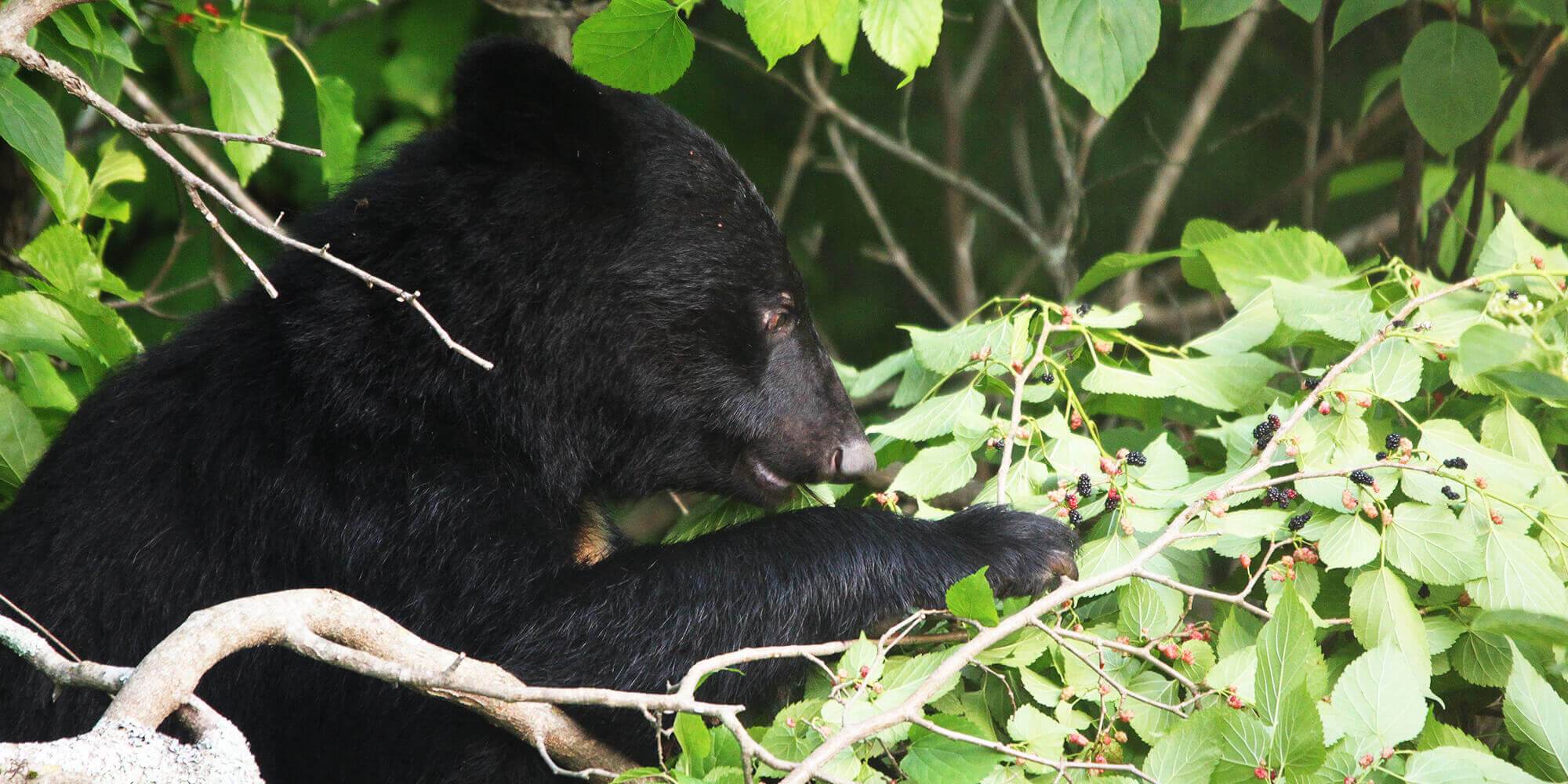
Asiatic Black Bear |
| Scientific Name: |
Ursus thibetanus |
| Other names: |
Also known as “Moon Bear” because of the white
crescent mark on their chest. |
| What they eat? |
Omnivorous but mainly plants (grasses, berries, nuts, insects
such as ants and bees) |
| How many cubs: |
One or two cubs in every two or more years. |
| Hibernation period: |
Early December to mid April (in Karuizawa) |
| Habitat: |
Forests (mainly deciduous) |
| Social life: |
Other than females with cubs, they live alone. |
 |
| Body length: |
1.2~1.4 meters. Has a very flexible body and can
get into small spaces. |
| Weight: |
60~140 kg, Males are usually larger than females. |
| Nose: |
Extremely sensitive. |
| Eyes: |
Poor color recognition. It is said that they cannot recognize
some colors. |
| Ears: |
Sensitive hearing. |
| Fur color: |
Jet-black with a white crescent marking on the chest. |
| Crescent Mark: |
Shape and size differ with each bear.
Some may have only a small spot, or does not have any marking
at all. |
| Claws |
Used for digging and climbing trees. |
| Legs: |
They can run almost 40 km/hour. Adept at climbing trees and
can also swim. |
| Teeth: |
Has flat molars like ours, and pointed canines. |
|
 |
Distribution in Japan
 |
| Distribution of bears in Japan |
In Japan, Asiatic Black Bears live on the mainland (Honshu) and
Shikoku Island. They do not appear in Hokkaido, the North Island,
and brown bears (Ursus arctos) only inhabit Hokkaido.
The Asiatic Black Bear population in west Japan is small, and
there are few sightings reported on Kyushu Island. There are also
many areas in which their habitats are fragmented by roads and other
man-mad objects.
Asiatic black bears need to eat large amounts of acorns in autumn
to thrive. Thus the distribution of Asiatic Black Bears coincides
with that of deciduous forests like Beech (Fagus crenata)
and Oak (Quercus mongolica). |
 |
Distribution in Asia
Other than in Japan, they are found in Iran, Afghanistan, Pakistan,
India, Nepal, Bhutan, Bangladesh, Myanmar, Laos, China, Taiwan and
Russia. More detailed research on the distribution is currently
being conducted. |
 |
Bear Signs in Forests
 |
 |
 |
| A claw mark on a tree |
A paw print |
When a bear eat acorns, he sits in a tree, breaks
and pulls branches to bunch them together |
|
 |
Year in the life of an Asiatic Black Bear
Spring: Come out of torpor and eat newly sprouted
greens. Females who give birth to cubs during the winter come out
a little later than males. Early summer:
Breeding season for bears, but fertilized eggs will not be implanted
until December. They are not monogamous and often breed with different
mates. 1 1/2 and 2 1/2 year old cubs are separated from their mothers
during this time of the year. Summer: There
are not many natural foods for bears during the summer. Usually bears
eat insects such as ants, but some bears are drawn to town by the
smell of garbage.
 |
| A winter den |
Autumn: Eat lots of nuts such as acorns and chestnuts
to store fat. It seems that bears tend to venture into town during
years when food sources are scarce. It is said that females who do
not store enough fat during this season will not fall pregnant.
Winter: Bears go into torpor. Bear's torpor
is not considered a "true hibernation" as in the Siberian
Chipmunk or the reptiles. The body temperature of bears drops only
a few degrees in Celsius. Pregnant females give birth to one or two
cubs during the torpor, around February, in their dens. |
 |
Conflicts with human beings
 |
| A damaged tree |
Asiatic black bears have to be protected in some areas. On the other
hand, over one thousand bears are killed every year due to hunting
and preventing agricultural damage, and so on.
 |
| Damaged crops |
|
| |